
Steam Cleaner vs Pressure Washer: Which Equipment Fits Your Car Wash Operation?
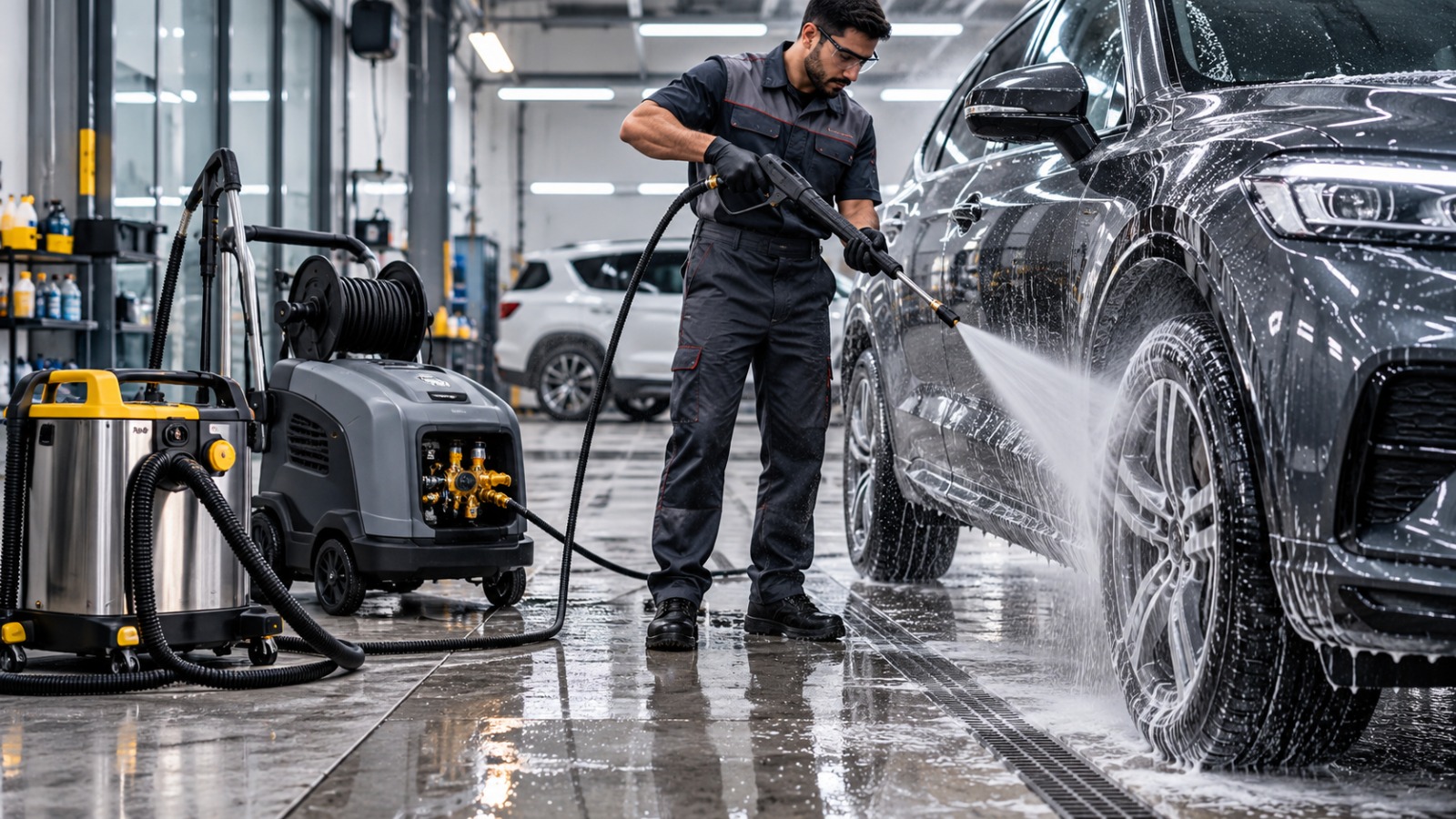
Commercial Vehicle Cleaning Equipment
Steam Cleaner vs Pressure Washer: Which Equipment Fits Your Car Wash Operation?
Choose vehicle cleaning equipment based on the surfaces you clean, the type of soil you remove, your daily vehicle volume and the practical requirements of your wash bay.
Explore Steam Cleaning Machines Explore Hot Pressure Washers
A pressure washer and a steam cleaner can both earn their place in a vehicle cleaning business, but they solve different problems. If most of your jobs involve washing exterior panels and removing road grime, the priorities will be different from a service focused on targeted cleaning around components or hard-to-reach areas. Choosing by the machine name alone can leave you with equipment that does not suit the jobs customers actually book.
Begin by listing your most common cleaning jobs, the surfaces involved and how quickly each job needs to be completed. A pressure washer is often the first option to assess for broad exterior cleaning. Steam equipment may be worth considering for more targeted work, provided the surface, temperature and moisture limits allow it. For mixed services, compare the actual models and their operating instructions rather than assuming one machine can safely do everything.
Quick decision guide
Assess a pressure washer first: when routine exterior washing, loose dirt removal and rinsing are the main tasks.
Assess a steam cleaner: when targeted cleaning is required and the surface, material and manufacturer instructions permit the use of heat and moisture.
What Is the Practical Difference?
The main difference is how each machine delivers its cleaning action. A pressure washer uses a pressurised water jet, while steam cleaning equipment uses heated water or steam according to the unit’s design. Some pressure washers also heat the water.
| Factor | Steam Cleaner | Pressure Washer |
|---|---|---|
| Cleaning action | Heated water or steam, depending on the design | Pressurised water jet; some models heat the water |
| Main decision factors | Temperature control, surface compatibility and moisture management | Flow rate, working pressure, nozzle, drainage and cleaning distance |
| Key limitation | Heat and moisture can affect sensitive materials or electronics | High-pressure water can damage seals, trim, electrical components or coatings |
| Planning priorities | Suitable accessories, operating limits and maintenance | Water supply, drainage, nozzle selection and surface distance |
Choose by the Job, Not by the Machine Label
1. Exterior Body Panels and Wheels
For routine exterior washing, a pressure washer can help remove loose contamination before contact washing. The operator must still select an appropriate nozzle, stand-off distance and pressure for the surface. Avoid directing concentrated jets at damaged paint, open connectors, door seals, wheel-bearing areas or other sensitive components. A machine’s maximum pressure is not a recommendation to use that pressure on every surface.
2. Engine Bay and Underbody Work
These areas require particular care because water can reach electrical connections, sensors, bearings, connectors and coatings. The cleaning procedure should follow vehicle-maker guidance and the cleaning equipment manual. If the job requires controlled, localised cleaning, a steam system may be worth evaluating, but steam should not be treated as inherently harmless to electronics, adhesives, plastics or rubber.
3. Interior Detailing
Interior materials vary widely. Leather, fabric, headliners, displays, switches, airbag components and adhesive-backed trim may react differently to moisture and heat. Select tools and methods for the specific material and cleaning product. If a steam cleaner is used, follow its instructions for the accessory, temperature, distance and dwell time, and test an inconspicuous area when the material permits.
4. Fleet and High-Throughput Washing
When a bay processes many vehicles, cycle time and water handling matter as much as cleaning performance. Estimate setup time, cleaning time, refilling, heating, drainage, drying and operator movement. The fastest machine on a specification sheet may not produce the fastest overall workflow if it needs frequent pauses or cannot be positioned conveniently.
How to Compare Actual Equipment Specifications
Do not compare a steam generator and a pressure washer using a single headline number. Compare the specifications that affect the intended task and verify them in the model’s manual or written quotation.
Pressure washer checklist
- Working pressure and maximum pressure
- Water flow rate and temperature range
- Electrical supply and duty cycle
- Hose length, nozzle options and accessories
- Maintenance requirements and service support
Steam cleaner checklist
- Steam output or rated operating parameters
- Warm-up time and temperature or pressure controls
- Tank capacity or water-feed arrangement
- Included accessories and intended applications
- Scale management, maintenance and operating limits
Check for both machine types
- Intended operating environment
- Consumables and routine servicing
- Operator training and warranty terms
- Installation requirements and available utilities
Example: Texas Equipment Hot Pressure Washer
Texas Equipment lists the following specifications for its hot pressure washer. Use these figures as a starting point for assessing whether the unit fits your workshop’s cleaning requirements, rather than as a universal specification for every hot pressure washer.
| Absorbed power | 3 kW |
| Electrical supply | 230 V / 50 Hz |
| Maximum temperature | 90°C |
| Delivery rate | 600 litres per hour |
| Working pressure | 130 bar |
| Maximum pressure | 150 bar |
These figures help you assess the available electrical supply, required water flow, working pressure and target temperature. Confirm the exact model, operating conditions and installation requirements with the supplier before purchase.
View Texas Equipment Hot Pressure Washer details
Decision Rules for Workshop Buyers
- For routine exterior pre-washing: compare pressure washers by flow, working pressure, nozzle options, duty cycle and drainage requirements.
- For targeted cleaning around delicate materials: assess whether a steam system is appropriate for the specific surface and follow vehicle and equipment instructions.
- For mixed service operations: evaluate whether separate machines would improve safety, repeatability or workflow.
- For high daily vehicle volumes: compare complete cycle times, water handling, operator movement and interruptions, not just rated performance.
- Before committing to a model: verify the specifications, accessories, operating limits, service arrangements and installation needs.
Plan the Wash Bay Before Installing Equipment
Machine selection is only one part of the setup. The position of the unit, water connections, electrical supply, drainage and vehicle movement can affect day-to-day operation.
- Check the available floor space and the route operators will use around each vehicle.
- Plan drainage and any required water collection or treatment arrangements for the site.
- Confirm the electrical connection and other utilities against the exact equipment specifications.
- Provide suitable ventilation and safe working space for the intended process.
- Position hoses, accessories and drying areas to reduce unnecessary movement and trip hazards.
For UAE workshops, consider ambient heat, water availability, drainage, ventilation, operator shifts and the time vehicles remain in the bay. Confirm site-specific installation and compliance requirements with the relevant installer and authority before commissioning.
Maintenance That Helps Reduce Downtime
Maintenance requirements differ between models, so use the manufacturer’s instructions as the controlling reference. A practical routine should cover:
- Inspect hoses, connectors and accessible components for wear or damage.
- Check water supply and accessible filters according to the manual.
- Look for leaks and report unusual changes in pressure, temperature or performance.
- Descale steam equipment only as directed by its manufacturer.
- Check pressure-washer nozzles and replace worn components as required.
- Store accessories correctly and keep the operating area organised.
Isolate power and depressurise equipment as directed before servicing. Stop using equipment with damaged pressure hoses, unsafe connections or abnormal behaviour until it has been inspected.
Common Purchasing Mistakes to Avoid
Choosing by maximum pressure alone: a higher figure does not automatically mean a better result for every vehicle or surface.
Assuming steam is safe for every material: heat and moisture can affect electronics, adhesives, plastics, rubber and interior finishes.
Ignoring daily throughput: warm-up time, refilling, drainage, drying and operator movement all influence the complete cleaning cycle.
Skipping installation checks: confirm power, water supply, drainage, ventilation and maintenance access before choosing the final position.
Measure Performance Before You Buy
If you are unsure which technology fits your work, run a controlled comparison before committing to a major purchase. Choose a repeatable cleaning task, define the expected result and measure the time, water, consumables and operator effort required.
Include difficult but common jobs rather than relying on an easy demonstration. Record the exact model, accessories, settings and cleaning products used so the result can be reproduced. Inspect the same areas under similar lighting and document any differences in method.
The objective is not to declare one technology the winner. It is to establish a safe, repeatable process with a reasonable cost per completed vehicle. A pressure washer may suit one stage while a steam unit suits a different targeted task.
Supplier Demonstration Checklist
Before requesting a quotation or arranging a demonstration, prepare the following information:
- The vehicle types and surfaces you clean most frequently.
- The common types of dirt, grease or contamination you need to remove.
- The number of vehicles you process per shift and your target cycle time.
- The available water, drainage, electrical supply and floor space.
- The exact model, accessories, operating settings and consumables proposed.
- The maintenance schedule, service arrangements and applications excluded by the manufacturer.
A useful demonstration should answer these specific questions and show how the proposed machine performs on a task similar to your actual workshop work.
Frequently Asked Questions
Is a steam cleaner better than a pressure washer for cars?
Neither is universally better. The right choice depends on the surface, soil, cleaning method, throughput and manufacturer limits. Some operations benefit from both.
Can a pressure washer be used in an engine bay?
Only if the cleaning method is suitable for the vehicle and the operator follows the relevant guidance. High-pressure water can damage electrical and mechanical components.
Does steam cleaning always use less water?
No universal conclusion is safe. Water use depends on the machine, task, operator technique and whether additional rinsing is required. Compare measured consumption for the intended job.
What should I compare before buying a hot water pressure washer?
Check working pressure, flow rate, maximum temperature, electrical supply, duty cycle, hose and nozzle configuration, maintenance and service support.
What should a UAE wash bay consider before installing cleaning equipment?
Heat, daily throughput, drainage, ventilation and the location of water and power connections all affect the setup. Map the cleaning route and drying area before deciding where the machine will sit, and verify site-specific installation requirements.
Choose Equipment for Your Actual Workflow
Start with the tasks your wash bay performs most often. List the surfaces and soils, compare the documented machine capabilities, and confirm operating limits and installation needs before selecting a configuration.
Steam Cleaning Machines | Hot Pressure Washers | Washing Equipment
Get Equipment Guidance from Texas Equipment UAE
Sharjah Showroom: Shop #15 BMW Road, Industrial Area 2, Sharjah
Phone: +971 6 552 9860 | WhatsApp: +971 54 320 1243
Abu Dhabi Musaffah Branch: M9, 6th Street, Musaffah Industrial Area, Abu Dhabi | WhatsApp: +971 50 409 4965