
TEXAS EQUIPMENT UAE | BODY SHOP TOOLS
Match Dent Pulling Tools to Panel Damage and Repair Method
A vacuum dent puller and a slide hammer use different attachment methods. The right choice depends on the dent shape, surface condition, panel access and repair procedure, not simply the tool available.
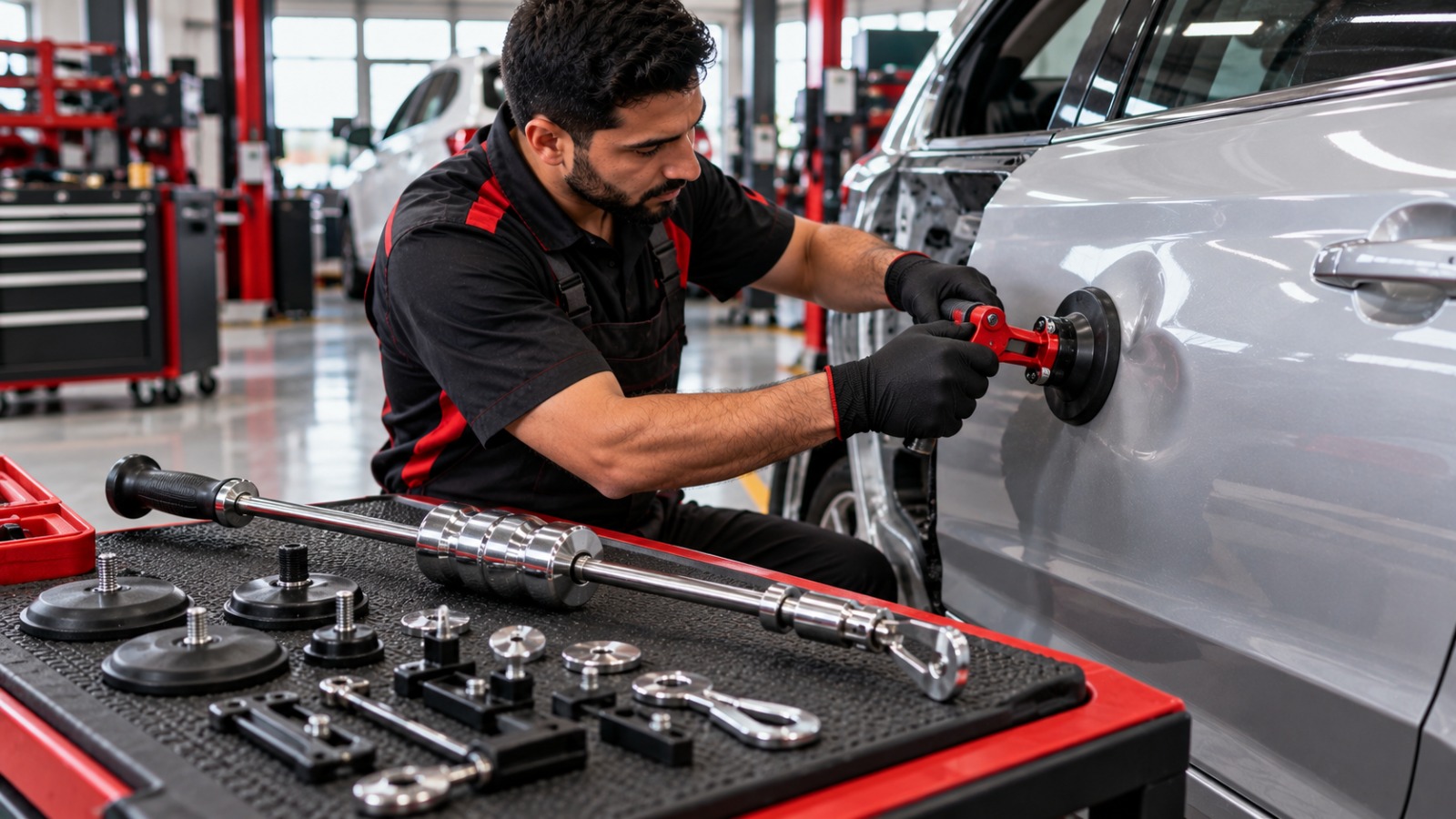
A dent repair can go wrong before the first pull if the technician chooses a tool that does not suit the panel. A vacuum dent puller vs slide hammer comparison starts with the attachment method, paint condition, dent geometry and access to the damaged area.
A vacuum puller relies on a suitable surface and a secure suction seal. A slide hammer or other mechanical puller applies force through its specified attachment system. Neither tool is suitable for every repair, and neither guarantees a perfect finish.
Vacuum Dent Puller vs Slide Hammer: Key Differences
| Factor | Vacuum Dent Puller | Slide Hammer / Mechanical Puller |
|---|---|---|
| Attachment | Uses suction where the surface and tool allow a reliable seal. | Uses the attachment system specified for the particular tool and repair method. |
| Surface requirements | Needs a suitable contact area and surface condition. | May require an appropriate attachment point or a prepared repair area. |
| Main limitation | May not grip textured, sharply creased or unsuitable surfaces. | Incorrect attachment or excessive force can distort or damage the panel. |
| Selection priority | Surface compatibility and dent shape. | Access, attachment method and force control. |
1. Inspect the Dent Before Choosing a Tool
Assess the dent’s depth, edges, creases, paint condition and location. Also identify the panel material and consider whether there is access behind the damaged area.
- Shallow dent on a suitable surface: Assess whether a suction-based method is appropriate and whether the tool can attach securely.
- Sharp crease or stretched metal: Assess the panel and repair access before choosing a pulling technique.
- Cracked or damaged paint: Consider the risk of worsening the finish and whether refinishing will be necessary.
- Previous filler or repair work: Inspect the existing repair before applying pulling force.
- Unknown panel material: Check vehicle repair information or consult a qualified body repair specialist.
Do not promise paintless dent repair based on the tool alone. Panel construction, damage severity, paint condition and repair requirements determine the appropriate approach.
2. When Is a Vacuum Dent Puller Suitable?
A vacuum dent puller may be suitable for certain shallow dents when the contact area is smooth enough to form a secure seal and the tool manufacturer’s instructions permit the application.
Before pulling, check the surface, suction pad, seal and tool condition. If the puller cannot attach securely, do not compensate by applying uncontrolled force or using an improvised attachment.
Texas Equipment lists a Vacuum Dent Puller described as a heavy-duty suction puller with a manual vacuum pump for portable use.
3. When Is a Slide Hammer or Mechanical Puller Suitable?
A slide hammer dent puller applies pulling force through the attachment method specified for the tool and repair. The suitability of that method depends on the panel, access, damage shape and repair procedure.
Incorrect attachment or excessive pulling force can stretch metal, damage the surface or create additional distortion. Verify the attachment system and follow the tool manufacturer’s operating instructions.
Texas Equipment also lists a 13-piece Dent Puller Slide Hammer Set with a 2.8 kg hammer and adapters for pulling dents from sheet metal without removing car components, as described in its product listing.
4. Practical Decision Rules for Body Shops
5. What Should a Workshop Buy?
Choose automotive dent removal tools according to the repairs your workshop actually performs. The number of pieces in a kit is less important than compatibility, safe operation and the availability of required accessories.
- Identify the common dent types and panel materials in your workload.
- Check which attachments, suction pads, hooks and adapters are included.
- Confirm whether additional accessories or consumables are required.
- Review the manufacturer’s instructions, limitations and maintenance guidance.
- Ensure technicians are trained to use the selected repair method.
- Check whether replacement accessories are available when needed.
6. Texas Equipment Dent Pulling Tools
PORTABLE SUCTION PULLER
Vacuum Dent Puller
AED 550 + VAT
According to the product listing, this tool includes a manual vacuum pump, three suction pads, one hook and a 2.5 kg slide hammer. Confirm current price, included accessories and intended application before purchase.
MECHANICAL PULLING SET
13-Piece Dent Puller Slide Hammer Set
AED 400 + VAT
The listing describes a set with a 2.8 kg hammer and adapters for sheet-metal dent pulling without removing car components. Confirm which attachments are included and whether the set is suitable for the repair method you use.
Explore more options in Texas Equipment’s Body Shop Tools category and Body Shop Equipment range.
7. Protect the Panel and Technician
Inspect handles, pulling elements and attachments before use. Wear suitable personal protective equipment, follow the tool instructions and keep bystanders clear of the pulling direction.
Avoid sudden or uncontrolled force that may release an attachment or deform the panel unexpectedly. If the repair involves welding, adhesives or heat, follow the relevant product and vehicle repair procedures and use trained personnel.
Document the panel condition before repair and record the method used. Explain realistic outcomes to the customer, including the possibility of additional work if hidden damage or stretched metal becomes apparent.
Frequently Asked Questions
Is a vacuum dent puller safer for paint?
Not automatically. Suitability depends on the surface, paint condition, dent shape and tool instructions. An unsuitable pull can still damage the finish.
Can a slide hammer remove every dent?
No. Panel material, access, damage shape and the attachment method determine suitability. Excessive force can worsen the damage.
Can these tools be used on plastic panels?
Only if the tool and repair procedure support the particular plastic panel. Verify compatibility rather than assuming a method designed for metal will work on plastic.
What should I check before buying dent pulling equipment?
Check the intended applications, compatible panel types, included attachments, required accessories, maintenance instructions and the repair methods your workshop performs.
TEXAS EQUIPMENT UAE
Need Dent Pulling Tools for Your Body Shop?
Tell us which panel materials and dent types your technicians handle most often, and whether you need a portable suction puller or a mechanical pulling set. Confirm the intended application and included accessories before selecting equipment.
WhatsApp for Product Guidance → Request a Quotation →
Sharjah showroom: Shop #15 BMW, Al Batha Warehouses & Shops, Industrial Area 2, Sharjah
Phone: +971 6 552 9860
WhatsApp: +971 54 320 1243
Abu Dhabi branch: M9, 6th Street, Musaffah Industrial Area, Abu Dhabi
Abu Dhabi WhatsApp: +971 50 409 4965
Tool specifications, included accessories and prices may change. Confirm current product details and application suitability with Texas Equipment before purchase. Always follow the tool manufacturer’s instructions and applicable vehicle repair information.